



Part 1: Why Did God Let It Happen?
Hello, faithful readers! I’m so excited to start a new series this week, and we’re talking about questions that we all have but may not feel comfortable to ask. This series will not be extensive, so if there’s something specific you’d like to talk about, feel free to leave a comment.
Have you been in church and heard the phrase, “God is good, all the time!”, and “All the time, God is good!”. Maybe it’s just me, but I remember sermons started this way for years, and everyone in our church knew the response.
Have you ever doubted that God is good?
I know I have doubted, especially when things are going sideways. When I’ve lost a job, during my parents’ divorce, or when a loved one died, I’ve questioned whether or not God is good. I’m probably more disposed to this thought process when my body is responding to stress, and there’s a migraine. It’s easy to become depressed and be tempted to self-destructive behavior during these times.
We’re supposed to do good things and try hard every day, but we’re just not happy.
We hear about global catastrophes, children starving, wars, and innocent people suffering.
Why did God let it happen?
This has been a question for a long time.
About 300 years before the birth of Jesus, the Greek philosopher Epicurus came to these conclusions:
If God is not able to prevent evil, then he’s not all-powerful
If God is not willing to prevent evil, then he’s not all good
If God is willing and able to prevent evil, why does evil exist?
Evil and suffering are not contrary to the story of the Bible. They are central.
Christianity makes sense of, gives meaning to, and offers a solution for the evil and suffering we experience. The Bible is our foundation and doesn’t avoid pain, evil, and suffering. Has countless expressions like anguish, confusion, rage, suffering, and pain.
For example:
Jeremiah was the weeping prophet and wails for unrepentant people
David was a man after God’s heart cried out to God, asking if He was listening or cared.
John the Baptist’s sole purpose was to prepare people for Jesus’ coming.
Asaph was a man to whom 12 Psalms were attributed. He was a prophet, poet, and leader in the Tabernacle choir said this:
Psalm 73:11–14 (ESV): And they say, “How can God know? Is there knowledge in the Most High?” Behold, these are the wicked; always at ease, they increase in riches. All in vain have I kept my heart clean and washed my hands in innocence. For all the day long I have been stricken and rebuked every morning.
Why does God allow suffering?
If love is a choice, suffering is a possibility.
The only way love is possible is to have a choice. Free will is God's gift, granting us the power to choose our paths. It reflects His love and desire for a genuine relationship. Our choices shape our character and impact the world. Free will makes evil and suffering possible.
Why did God give us free will?
This is the only way love is possible. God does not desire rocks or robots. Instead, He longed for a relationship with beings capable of genuine love. That's why He bestowed upon us the gift of free will. By being free to choose, we can willingly embrace love and forge a real connection with our heavenly Father. However, with this freedom comes the potential to choose the opposite—evil. Through our choices, we demonstrate true love and commitment to God, reflecting the essence of our relationship with Him.
When we make the unfortunate choice of embracing evil, we are essentially choosing sin, which, in turn, leads to inevitable pain and suffering. It's crucial to recognize that God, in His infinite wisdom, granted us the freedom to choose. If He were to eliminate evil and suffering by removing our freedom to choose, it would fundamentally alter the essence of our relationship with Him.
In such a scenario, we'd lose the freedom to express genuine love and commitment.
What if there were no rules?

What if there were no parents to set rules providing guidance and structure? Authority is necessary to establish a moral standard. Without God, there would be no ultimate moral point of reference. The presence of evil and suffering in our reality, far from disproving God's existence, actually serves as evidence of our shared belief in a higher power. We can't use the existence of evil and suffering as proof that God doesn't exist. Instead, it underscores the reality that our acknowledgment of these challenges is a testament to His presence in our lives.
How can God love us and allow suffering?
Suffering does not indicate a lack of love. It often serves as a precursor to something better. Think about a physical therapist guiding you through daily challenges, knowing that the difficulty paves the way for improved well-being. A counselor delves into the tough aspects of your past with the understanding that facing these trials is a step toward a brighter future. Even in parental discipline, where the intention may seem to inflict pain, the underlying reason is to guide the child towards something better—be it overcoming addiction or staying out of trouble. God in His infinite love, allows us to navigate suffering, trusting that a greater purpose and blessing await us on the other side.
Why do bad things happen to good people?
None of us are inherently good. We have all fallen short and sinned. It is in this understanding that the uniqueness of Jesus shines. He is the only one truly good and sinless. In the history of humanity, the only instance where something bad led to something ultimately good was when Jesus willingly volunteered for the sacrifice. His selfless act on the cross transformed the darkest moment into the ultimate redemption, bringing forth salvation and eternal goodness.
Jesus felt more pain than we’ll ever feel.
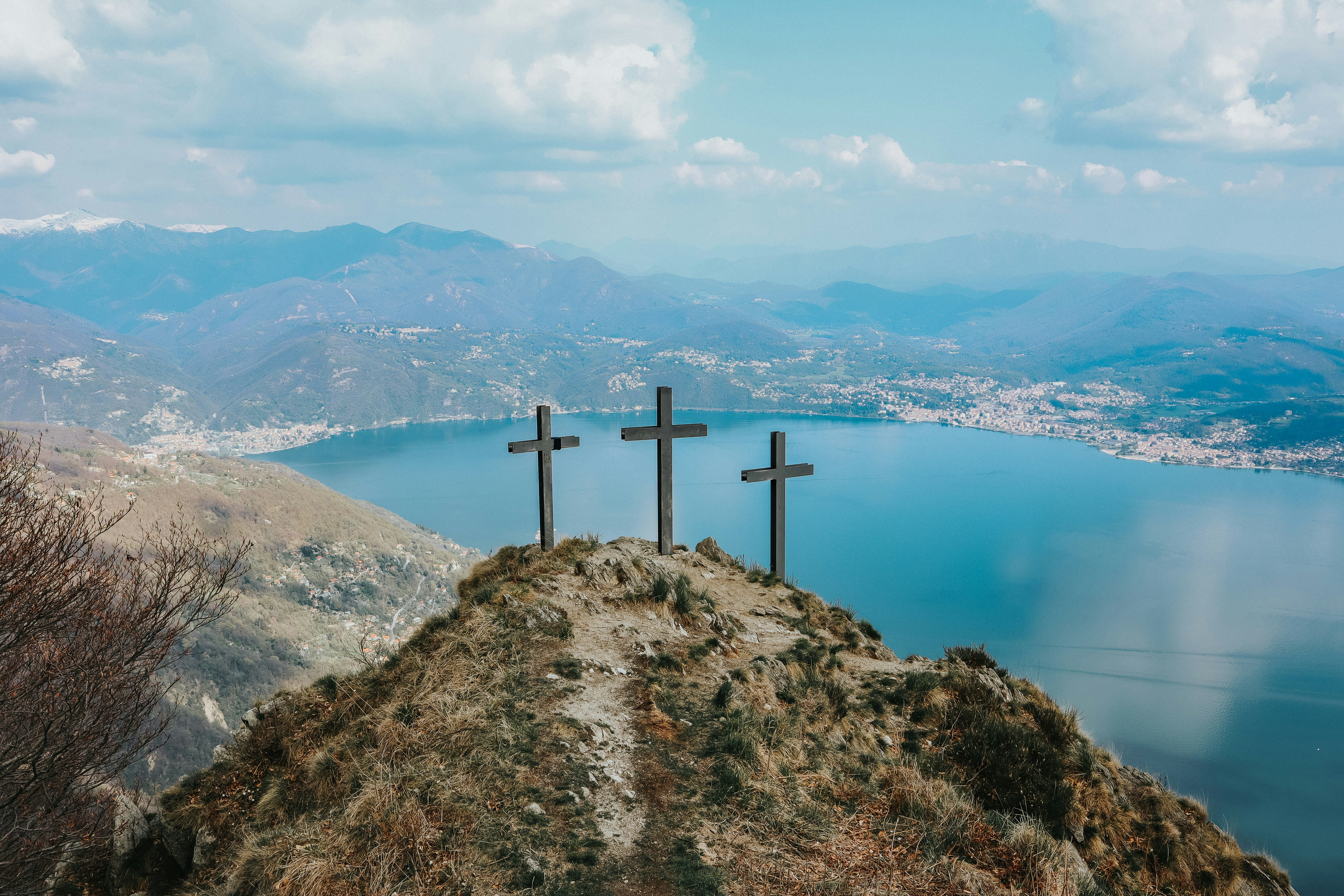
In a sacrificial act beyond comprehension, God surrendered the glory of heaven to be born into poverty on earth. Jesus, the Son of God, experienced the harsh realities of human life—mocked as a child born to an unwed mother, rejected by His own family, abandoned by friends, falsely accused, wrongly imprisoned, beaten, tortured, and shamefully hung on a cross, where He bore the weight of our sins. In the darkest moment, Jesus cried out:
Matthew 27:46 (ESV): “And about the ninth hour Jesus cried out with a loud voice, saying, “Eli, Eli, lema sabachthani?” that is, “My God, my God, why have you forsaken me?”
This scripture highlights the unimaginable separation from the Father after a lifetime of perfect intimacy.
Yet, in this immense suffering, Jesus came not only to suffer for us but also to suffer with us. He felt more pain than we could ever comprehend, and God, in His infinite wisdom, watched as His Son endured the agony of the cross. This unparalleled act of love demonstrates the depth of God's connection with humanity, as He chose to share in our suffering to redeem and reconcile us to Himself.
So, why does God allow suffering?
The answer to that question differs for every situation, and it doesn’t change God’s love for you.
John 3:16 (ESV): “For God so loved the world, that he gave his only Son, that whoever believes in him should not perish but have eternal life.
God's love for us is immeasurable.
He took our misery and suffering so seriously that He willingly allowed His Son to bear it on the cross. Why? Because God had something infinitely better in store for us. Through this sacrificial act, a cascade of blessings unfolds—forgiveness for our sins, freedom from the chains of despair, and the ultimate victory over darkness. God's love surpasses our understanding, and in His divine plan, our suffering becomes the gateway to a future filled with His abundant grace and blessings.
Something better is coming!
The Bible says we will suffer, we will die, and it also says we will rise. Those who use their free will to follow Jesus will meet him in eternal glory and suffer no more.
Revelation 21:4 (ESV): “He will wipe away every tear from their eyes, and death shall be no more, neither shall there be mourning, nor crying, nor pain anymore, for the former things have passed away.”
What will we experience?
No more loss
Sickness
Shame
Death
Grief
Depression
Abuse
Crying
Pain
We’re not there yet
When the pain and suffering are rampant in our world, we don’t know and can’t answer for those we lose in tragic accidents, why people are molested, and why our loved ones die of cancer. We may never know on this side of Heaven. At any given moment, we can shake our fists at God and say, “This is not fair!” This is all part of a lifetime of walking with God.
Does God know what’s happening?
Asaph asked this question, and this is his response:
Psalm 73:16–17 (ESV): “But when I thought how to understand this, it seemed to me a wearisome task, until I went into the sanctuary of God; then I discerned their end.”
Psalm 73:26 (ESV): “My flesh and my heart may fail, but God is the strength of my heart and my portion forever.”
Something Better Is Coming
Evil and suffering are not an anomaly in the Bible. They are central to its overarching story. The story of God's love and redemption makes sense of our challenges. In times of suffering, we must remember that God's love transcends our understanding. While we may not wish for the worst experiences while suffering, God's love is at work, using our trials for a greater purpose. If you are hurting right now and wondering where God is, remember we’re not there yet. Something better is coming.
It's interesting that you mentioned that Jesus was rejected by his own family. They never talk about this in church either. Thank you, Pastor Chris.
Hey there! Thanks a bunch for jumping into the conversation. I really appreciate your insights from Genesis 1-11 and Romans 7. It's eye-opening to see how sin's roots impact us, and you nailed it with the importance of Yeshua's death and resurrection. Praying for continued blessings on your faith journey – let's keep the conversation going!