


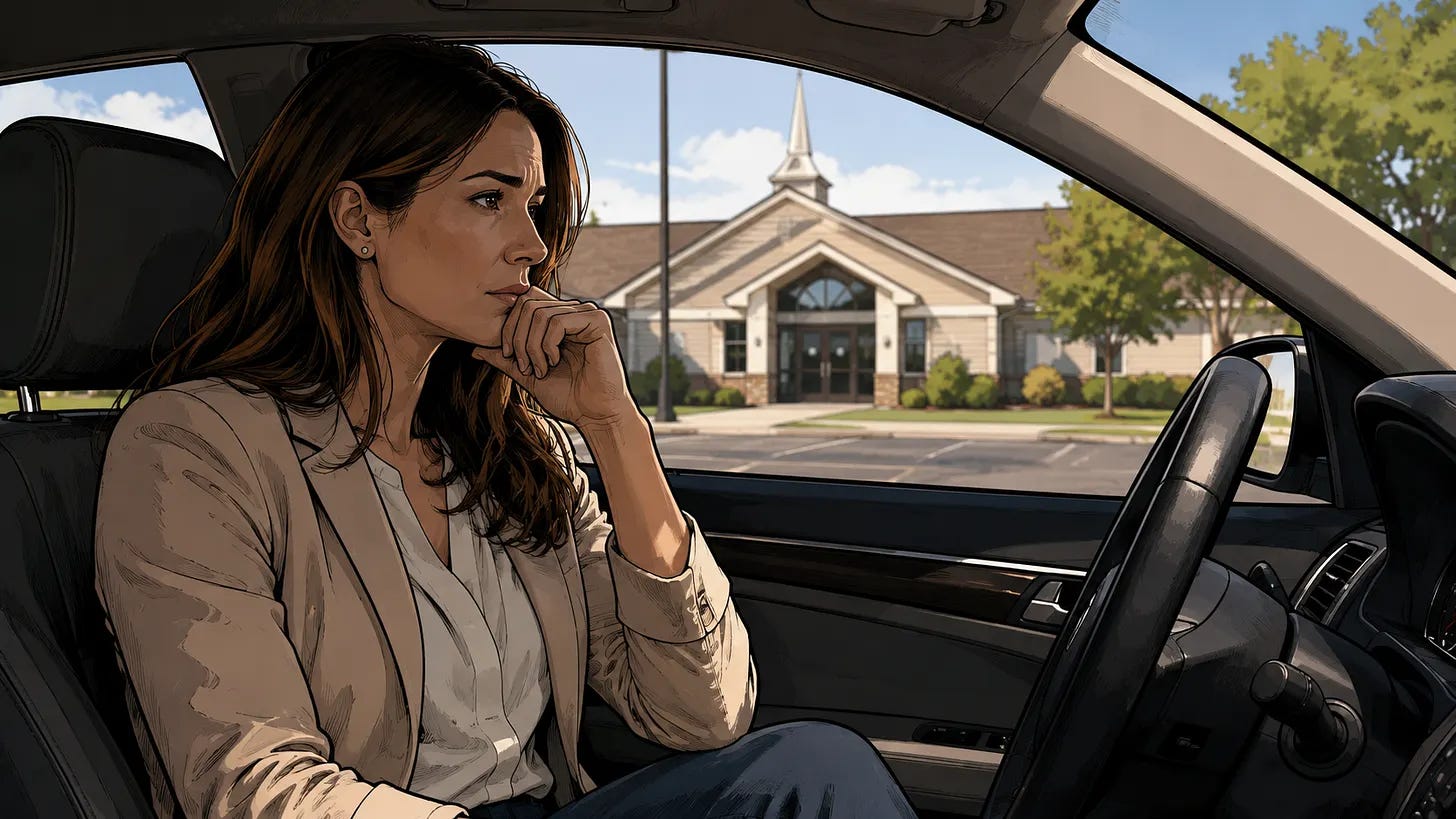
I’ve watched people sit in church parking lots for ten or fifteen minutes before ever opening the car door. They wanted to go in. They missed worship. They missed being part of a church family.
But something inside kept whispering, “What if it happens again?” Sometimes they walked through the doors. Sometimes they started the car and drove home. None of them expected their story to end up here.
Most people don’t notice the moment it begins.
You don’t wake up one morning and decide to become cynical. It happens a little at a time. Someone lies to you. Someone betrays your trust. Someone uses their position to wound instead of protect.
After enough disappointments, your heart quietly starts making promises.
I’ll never trust another leader. I’ll never serve again. I’ll never let anyone get that close.
At first, those promises feel like wisdom. Eventually, they become prison walls. I’ve watched this happen more times than I can count.
The saddest part isn’t that people stop trusting churches. It’s that they slowly stop expecting goodness from anyone.
Church hurt rarely stays inside church walls. It follows people home. Into marriages. Friendships. Workplaces. Even into their relationship with God.
When your heart stays in survival mode long enough, everything starts looking like a threat.
Church hurt doesn’t just make Sunday mornings difficult. It changes the way you read the Bible. You wonder if every sermon has an agenda. You second guess every invitation to serve because you remember how exhausted you became the last time.
When someone says, “We’re family here,” part of you wants to believe them. Another part quietly whispers, That’s what they said last time.
You don’t even realize how guarded you’ve become until someone genuinely cares about you and your first instinct is to wonder what they want.
One of the hardest things about betrayal is that it changes more than your circumstances. It changes your instincts. You begin questioning people’s motives before they’ve even spoken. Compliments feel suspicious. Kindness feels temporary. You start preparing for disappointment before anyone has the chance to disappoint you.
The wound becomes a filter. I’ve met people who still love Jesus with all their hearts. But they can’t receive love from anyone else. Not because they don’t want to. Because pain taught them that every open door eventually closes.
That isn’t weakness. It’s what hurt often does if it doesn’t heal. Healing rarely happens because enough time passes. It happens because we slowly invite Jesus into the places we'd rather keep hidden.
The Lie That Keeps People Away
I can still hear his voice.
I was twelve years old, helping at my church when my uncle came to pick me up. Before we left, I asked if he’d like to come to church sometime.
I still remember his response. “I’m not good enough for church.”
At twelve years old, I didn’t know how to answer him. I just remember how deeply those words settled into my heart. I’ve wondered about that conversation many times over the years.
I don’t know if he ever walked back into another church.
But after more than twenty years in ministry, I’ve realized he wasn’t the only person who believed that lie. I’ve met people who thought they weren’t good enough for church. I’ve met others who believed church wasn’t good enough for them anymore.
Different stories. The same distance.
Church hurt has a way of convincing us that the safest place is somewhere outside the church. Sometimes it’s because we feel unworthy. Sometimes it’s because we’ve been wounded. Either way, the result is often the same.
We quietly convince ourselves that staying away hurts less than hoping again.
Over the years, I’ve noticed something. People rarely stop following Jesus because of one painful conversation. They leave after hundreds of little disappointments convince them they’re safer alone.
They stop expecting anyone to notice when they’re gone. Eventually they stop expecting God to notice too. That’s why church hurt can become so dangerous. It doesn’t just convince us people aren’t trustworthy. It quietly tries to convince us that God is distant too.
David Had Every Reason to Become Bitter
David’s story usually gets remembered because he defeated Goliath. But Goliath wasn’t the greatest enemy David ever faced. Saul was.
David served Saul faithfully. He fought for him. Played music for him. Risked his life for Israel. And Saul responded by trying to kill him. Not once. Over and over again.
Imagine what that would do to a person. Every time David entered another cave. Every time he heard another army was searching for him. Every time he had to sleep wondering whether tomorrow would be his last.
It would have been easy to believe everyone in authority was dangerous.
It would have been easy to become like Saul.
I wonder how many nights David lay awake replaying every conversation with Saul. Wondering what he had done wrong. Wondering whether serving faithfully had been worth it. Wondering why God’s promise now felt farther away than ever.
It’s hard to keep a soft heart when your reward for obedience seems to be another cave.
David wasn’t hiding because he had failed. He was hiding because someone else had.
He was living with consequences he didn’t create.
That’s one of the hardest parts of church hurt. Sometimes you’re carrying wounds that belong to someone else’s sin.
But something remarkable happens in David’s story.
Twice, David had the opportunity to kill the man who had spent years hunting him. Twice. He walked away.
Not because Saul deserved mercy.
Because David refused to let Saul decide who David would become.
“Do not destroy him, for who can put out his hand against the Lord’s anointed and be guiltless?” (1 Samuel 26:9, ESV)
David understood something that many of us forget. Bitterness doesn’t just punish the person who hurt us. It reshapes us.
One of the greatest victories in David’s life wasn’t defeating Goliath. It was refusing to become another Saul.
Years later, when Saul finally died, David didn’t celebrate. He mourned. The man who had stolen years of David’s life was gone, yet David wrote a lament instead of throwing a party.
That’s what a soft heart looks like.
Not pretending evil wasn’t evil, but refusing to let evil decide who you become.
Bitterness Pretends to Protect You
Bitterness is convincing because it sounds responsible. It promises peace. It delivers isolation.
It tells you,
“Don’t get hurt again.”
“Don’t trust people.”
“Keep your expectations low.”
The problem is that bitterness never builds fences around pain. It builds fences around joy too. The same walls that keep people out eventually keep love out.
Eventually, they can even keep God at a distance, not because He stopped pursuing you, but because you've stopped believing it's safe to open the door.
And somewhere along the way, protecting your heart becomes imprisoning it.
Staying Soft Doesn’t Mean Staying Vulnerable
Sometimes Christians hear the words “guard your heart” and think it means building taller walls. That’s not what Scripture teaches.
Healthy boundaries are not bitterness. Forgiveness is not pretending nothing happened. Trust is not automatically restored because someone apologized.
Some Christians have been taught that forgiveness means immediately trusting someone again. Scripture never says that.
Forgiveness releases revenge. Wisdom rebuilds trust slowly.
You can forgive someone today while recognizing they haven’t earned yesterday’s level of trust. That’s not unforgiveness. That’s discernment.
Jesus forgave people.
He also walked away from people who wanted to manipulate Him.
You can forgive someone and still recognize they are no longer safe. Those aren’t contradictions. They’re wisdom.
Soft hearts can still have strong boundaries.
After more than twenty years in ministry, I’ve noticed something.
The people who heal the best aren’t the ones who pretend they aren’t hurting. They’re the ones who refuse to let pain become their identity.
I’ve watched people who were deeply wounded become some of the safest people to be around. Not because life became easy. Because they kept bringing their hurt to Jesus instead of handing it to everyone else.
I’ve also watched people who experienced far less pain become incredibly hard. The difference usually isn’t what happened to them. It’s what they did with it.
Pain is unavoidable. Bitterness is a choice we often make one small decision at a time.
You Might Be Healing If...
You no longer assume everyone has hidden motives. You still ask wise questions, but you no longer expect every conversation to end in disappointment.
You can pray for the person who hurt you without pretending what happened was okay. Forgiveness doesn’t rewrite history. It simply refuses to let history control your future.
You stop comparing every Pastor to the one who wounded you. Healing doesn’t mean you’ll never be cautious. It means every new leader no longer has to pay for someone else’s failure.
You begin believing there are still healthy churches and healthy leaders. Pain convinced you they didn’t exist. Healing reminds you they do.
You find yourself hoping again. Hope is often one of the first signs that God is quietly restoring your heart.
The Hardest Person to Forgive
One of the hardest people to forgive after church hurt is sometimes yourself. You replay conversations. You wonder why you didn’t see the warning signs. You ask yourself how you trusted someone who eventually betrayed you.
Maybe you’ve even wondered if you’re too naïve to trust anyone again.
But trusting people wasn’t your failure. Misusing that trust was theirs.
How Do You Stay Soft?
It probably doesn’t happen all at once. It happens one decision at a time.
One honest prayer.
One act of forgiveness.
One Sunday where you choose to walk back into church even though part of you wants to stay home.
Start by telling God the truth.
You don’t have to protect Him from your disappointment. David certainly didn’t.
Read through the Psalms and you’ll find prayers filled with confusion, grief, anger, and questions.
God can handle your honesty. Tell Him what’s really going on.
Healing begins when you are honest with God and stop pretending you’re okay.
Then give yourself permission to grieve.
Church hurt isn’t just the loss of a relationship. Sometimes it’s the loss of a ministry you loved. Friendships you thought would last forever. Years you can never get back. The church you thought would always feel like home.
You can’t heal what you refuse to mourn.
Forgiveness is often a decision. Healing is almost always a process. You may choose forgiveness today and still find yourself wrestling with bitterness next Tuesday. That doesn’t mean you’ve failed.
Healing usually happens one surrendered place at a time.
As you heal, stay close to people who consistently reflect the character of Jesus. One unhealthy church doesn’t prove healthy churches don’t exist.
One abusive leader doesn’t erase faithful shepherds. Don’t let one person’s failure become the standard by which you judge everyone else.
I’ve met Pastors whose quiet faithfulness will never make headlines.
People who love well. Lead humbly. Serve faithfully. God is still raising up shepherds after His own heart. Don't let Judas convince you there are no more Johns.
Build healthy boundaries without building walls.
There is a difference. A boundary says, “I won’t put myself in that situation again.” A wall says, “I’ll never trust anyone again.”
Boundaries protect your heart. Walls imprison it. The safest heart isn’t the one hidden behind the tallest walls. It’s the one resting in the hands of Jesus.
Most importantly, keep looking at Jesus.
The people who hurt you are not the clearest picture of God.
Jesus is.
If you ever wonder what God is like, don’t look first at the people who failed you. Look at the Savior who never will.
The night before the cross, Jesus was betrayed by one of His closest friends. Denied by another. Abandoned by almost everyone else. If anyone had reason to become cynical, it was Him.
Yet after the resurrection, He didn’t begin Peter’s restoration with a lecture.
He began with breakfast.
Peter had denied Jesus three times. Jesus could have begun with shame. Instead, He started with a meal. That’s what grace looks like.
That’s the kind of Savior He is. He doesn’t ignore wounded hearts. He feeds them. He restores them. Then He sends them back into the world capable of loving again.
The cross didn’t harden Jesus. It revealed the depth of His love.
That's the miracle Jesus is still doing today. Not making us people who are never hurt. Making us people whose wounds don’t have the final word.
Because the world has enough hard hearts already. What it desperately needs are people whose hearts have been broken and healed by Jesus.
Practical Steps
Ask God to reveal where hurt has quietly become cynicism. Sometimes bitterness disguises itself as wisdom. Invite God to show you where your heart has become guarded in ways He never intended.
Read 1 Samuel 24-26 and pay attention to David's heart more than Saul's actions. Notice how David refused to let another man's sin decide the kind of man he would become.
Ask yourself whether you've built a healthy boundary or an emotional wall. One protects healing. The other prevents it.
Forgiveness doesn't always erase pain overnight. Ask God for the courage to take the next step, even if the journey isn't finished yet.
The people who hurt you should not get the final vote on the person you become. Let Jesus write the next chapter instead.
Sometimes the strongest heart isn’t the one that never breaks. It’s the one that still chooses love after it does.
Frequently Asked Questions
Does staying soft mean I should trust everyone again?
No. Scripture encourages both forgiveness and wisdom. You can forgive someone while recognizing they are no longer trustworthy.
How do I know if I’ve become bitter?
Bitterness often shows up as expecting the worst from everyone, assuming hidden motives, or finding it difficult to celebrate someone else’s success or trust genuine kindness.
Can God really heal church hurt?
Yes. Healing often takes time, but God specializes in restoring wounded hearts. Many people discover that He becomes more real during healing than He was before the hurt.
Support Faith Unplugged
If Faith Unplugged has encouraged your walk with Jesus, would you consider supporting this ministry? Your support helps me keep creating biblical, practical resources that point people toward Christ and remind them they're not walking this journey alone. Whether you become a paid subscriber or simply share these articles with someone who needs them, thank you for being part of what God is doing through Faith Unplugged.

Thanks for writing this. I grew up with a father who was alcoholic and a drug addict. He abused me and that made me sensitive to hurt. I grew up Jewish Orthodox and my grandfather took me to temple every Saturday morning.
In my teenage years I was rebellious and started drinking, smoking and overeating I just couldn't trust God. He's an authority.
I made a lot of poor decisions and could have been in jail. When I was 21 I married a Catholic woman that drank and smoked like I did. We had a daughter together and the marriage fell apart. I caught her with another man. I filed for divorce.
My father as a result of reckless behavior was dying. I had a good job, but my own bad behavior and several calls from my wife ruined that. I was put on probation several times. With all the tsuris (Yiddish for adversity), it brought me to my knees.
At the age of 24 I went to counseling with Salvation Army. My therapist told me about a church that has a divorce support group.
I went to group early and there was a bible study. I was introduced to Yeshua (Hebrew name for Jesus) over a 6 month period.
Church hurts - opening your heart to the Holy Spirit in worship is such a vulnerable act. That is why it hurts so much when predators there do their predatory thing. Deep wounds.