


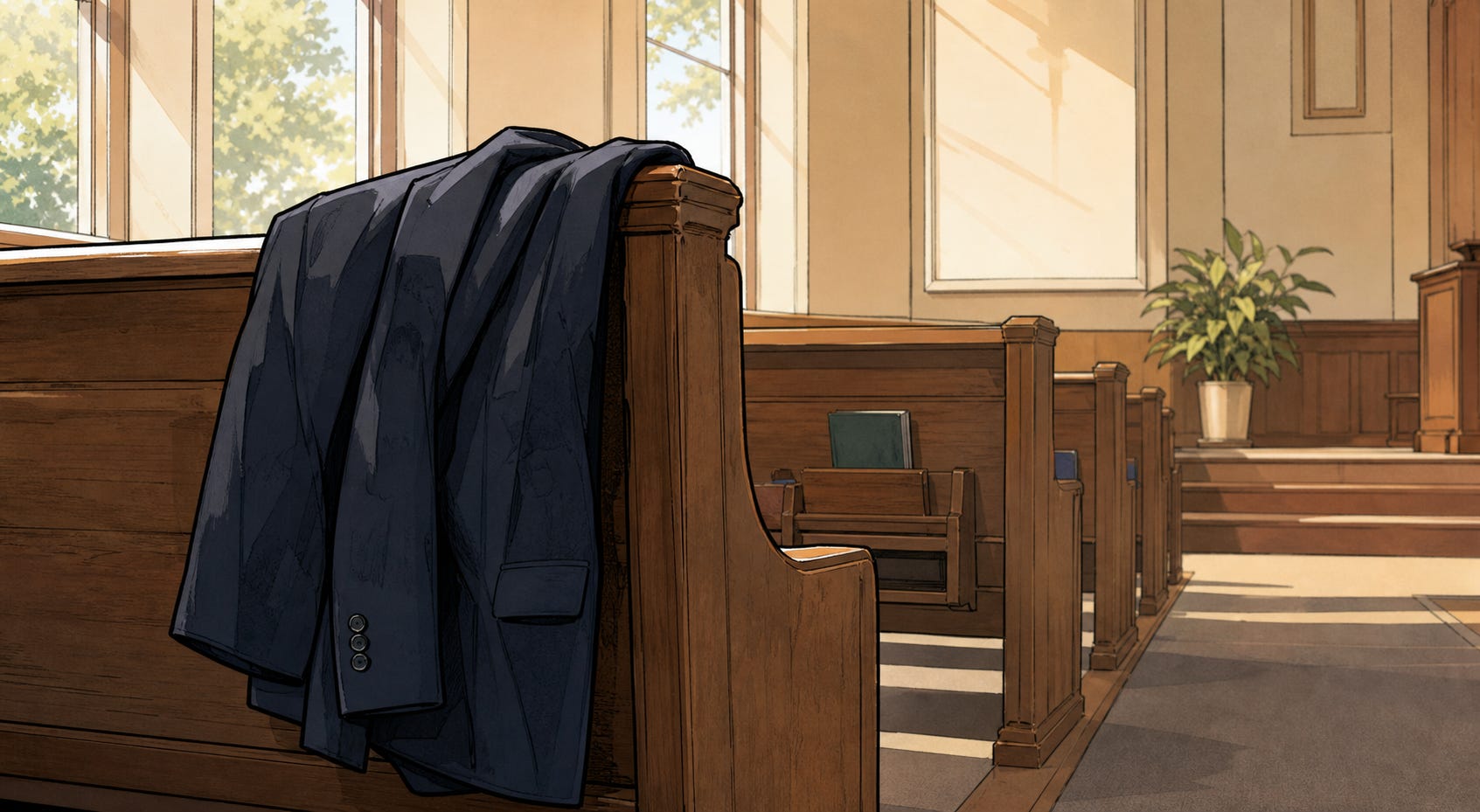
There’s a particular kind of pain that shows up when people who were supposed to help you heal become the ones who made the wound deeper.
When a person who doesn’t know God hurts you, you can almost write it off as “they can’t help it because they never claimed to know God.”
But it’s a very different thing when a person who taught the Bible, led meetings, served on teams, prayed out loud, and knew exactly what to say while they broke something in you.
That hurt stays with you and follows you into worship. It’s with you when you open the Bible and changes the way you hear sermons, invitations, apologies, and even the word “community.”
Sometimes it changes the sound of God’s voice in your mind.
You still love Jesus. You may still believe the gospel. You may still want to be a gracious person. But something in you pulls back.
You develop a tone with people and you notice power dynamics.
You start to see who gets protected, and who gets corrected.
You begin to see people using spiritual language to avoid taking responsibility.
And then you wonder if you’re becoming bitter.
It is possible that you’re not bitter, but injured.
Injured people need more than a lecture about forgiveness.
They need to know that Jesus saw this behavior, too.
Jesus Was Not Shocked by Religious Failure
Religious people weren’t able to hide their failures around Jesus.
That is both comforting and uncomfortable for religious people.
Jesus loved them. Comforted them. He invited them.
He was never fooled by their appearance.
He knew that a person could know scripture and still miss mercy. He knew someone could stand in a holy place with a heart that was unholy. He knew religious systems could protect reputations at the expense of the wounded.
This matters if you’ve been hurt in church.
Sometimes people act like naming the harm is the same as attacking the faith—and it’s not.
Jesus named harm clearly.
He called out hypocrisy. Exposed pride. Challenged leaders who placed heavy burdens on people and would not lift a finger to help them. He grieved over people who used religion to protect their image and avoid the truth inside.
Jesus didn’t ask hurt people to pretend their wounds weren’t real.
He told the truth.
That means we don’t have to choose between honesty and faithfulness.
You can love Jesus and still say, “that was wrong.”
A Man Left Wounded on the Road
Jesus told a story about a man who traveled from Jerusalem to Jericho.
This man was traveling a dangerous road—one that was isolated and steep, and where a person would not want to remain alone for long.
On the journey, the man was attacked by robbers.
He was stripped, beaten, and left half dead.
Think about that for a minute.
He was half dead.
He was alive, but not able to get himself home.
Church hurt can feel like that.
You’re still doing all the normal things.
Still answering emails, getting groceries, smiling when you need to.
But there’s a part of you that’s lying in that ditch on the side of the road, trying to breathe.
Jesus says a priest came by. A priest.
If anyone should have stopped and helped this person, it was him.
This person knew the law. He knew that showing mercy mattered.
He knew that God required mercy.
But when he saw the wounded man, he passed by on the other side of the road.
Then a Levite man came. Here’s another religious man. Someone who is connected to worship, service, and sacred things.
He saw this poor man too. And he also passed by.
Jesus doesn’t tell us about their excuses.
Maybe they were busy, afraid, and knew that helping would have cost too much.
Maybe they had somewhere important to be, or they had a very spiritual reason for not getting involved.
But the man in the road didn’t need their reasons. He needed mercy.
When the People Who Should Stop Keep Walking
If you’ve been hurt in the church, you may relate to this man’s story more than you’d like to admit.
It’s not just the original wound; it’s also the passing by and the silence afterward.
The people who saw enough to know something was off, but didn’t want the disruption of caring.
The leader who quickly changed the subject.
The friend who ghosted you.
The person who said, “I’ll pray for you,” because saying that was easier than sitting with the truth.
The community that knew how to celebrate publicly, but not how to restore privately.
Sometimes the real issue is not that you were hurt, but that the people who should have stopped, kept walking.
When that happens, it’s understandable that people question everything.
Was any of my experience real? Did they ever care about me? Is this what the church is? Is this what God is like?
These are big questions and they don’t go away just because someone tells you to move on.
Church hurt often leaves people grieving two things at once: what happened, and what should have happened but did not.
That second one is harder to explain.
You are grieving an apology that never came, protection that was never offered, the conversation that nobody was brave enough to have, and the version of church that you thought you belonged to.
When Church Leaders Don’t Look Like Jesus
When you serve as a pastor, one of the most unsettling things you discover is how much brokenness can hide behind the parts of church everyone sees.
People see the stage, the services, the smiles, the meetings, the language.
But leaders often see another layer. And sometimes that layer is painful.
I wish I could say church leadership always looks different from the world. Sometimes it does. There are humble, faithful leaders who quietly carry people, tell the truth, repent quickly, and love well.
But sometimes church leadership can look a lot like any other workplace with a ladder.
People protect position. People manage perception. People treat other leaders with contempt. People use spiritual language to cover insecurity, ambition, or fear.
We are supposed to be different. But we are still human. And when leaders are not deeply connected to Jesus, they can start looking like the systems they preach against.
I have been in rooms where I had to take the heat for things I did not do, could not have known about, and had no power to prevent.
I have been made the scapegoat because someone needed the story to land somewhere other than on them.
I have also been in situations where church leaders said things about me that were not true, hoping I would get frustrated enough to leave quietly.
That kind of thing does something to you.
Not just because it hurts personally, but because it happens in a place where people are talking about Jesus.
And when you are close enough to see that kind of brokenness, you understand why some people walk away wounded. You understand why they struggle to trust again. You understand why a sermon about forgiveness may not be enough.
Because sometimes the pain is not coming from people outside the church. Sometimes the pain is coming from people carrying church keys.
That is why the Good Samaritan story matters so much to me. Jesus did not pretend religious people always stop.
In His story, the priest saw the wounded man and kept walking. The Levite saw him too and passed by.
That part is uncomfortable because it tells the truth.
Religious titles do not automatically create mercy. Church roles do not automatically make someone safe. Being near holy things is not the same as having the heart of Jesus. And if you have been hurt by people who should have known better, I do not want to rush past that.
I just want to say: Jesus sees it. He saw it then. He sees it now. And He is not the one who crossed the road.
The Surprise in Jesus’ Story
Then there’s a person who showed up in Jesus’ story that no one expected.
A Samaritan.
You have to understand that to Jesus’ audience, the Samaritan should not have been the hero. He was an outsider, a person with the wrong background, and one that people had theological and cultural reasons to avoid.
But he was the one that stopped.
He saw the wounded man and had compassion. Not a vague feeling. Instead of a quick sympathetic glance, he had compassion that moved him.
The Samaritan went to him and bandaged his wounds. Poured oil and wine. He placed him on his own animal and brought him to an inn. Paid for his care and promised to come back.
That is what mercy looks like in the real world.
It sees what is happening.
It moves toward the person who is hurting.
It does the work of restoration, even when it is costly.
It stays involved after the immediate danger has passed.
Jesus showed us that religious people are not always the people who reflect God.
God may send someone you least expect to care for you.
This can be both painful and hopeful.
God’s mercy is not limited to the people who fail you.
God Is Not the Priest Who Passed By
I want you to know something important.
God is not the priest who passed by.
He’s not the Levite who looked and left quickly.
He’s not the leader who minimized your hurt.
He’s not the friend who got uncomfortable and ghosted you.
He’s certainly not the system that protected itself.
If church hurt has distorted your picture of God, that makes sense. When people carry God’s name while doing harm, it can make God feel unsafe too.
But Jesus tells us this story to separate religious appearance from true mercy.
The priest and the Levite may have represented respected religious leaders, but they did not represent the heart of God in that moment.
The heart of God was on display when the Samaritan man moved toward the wounded person.
If you want to know what God is like, look at the one who stops, the one who comes near, the one who treats wounds gently, the one who does not demand that wounded people get up quickly that everyone else can feel better.
Jesus is not a slave driver who stands over your pain with impatience.
Jesus is not embarrassed by your questions.
He’s not asking you to pretend the road was safer than it was.
Healing Does Not Mean Calling Evil Good
Those who have been hurt in the church may feel that beginning to heal would invalidate their suffering. That it means the people who hurt them get away with it. That it means they must smile, return, trust quickly, or act like the wound didn’t hurt.
But that’s not healing. That would be denial with church words on it.
Healing doesn’t mean calling evil good. It doesn’t mean pretending the priest stopped when he didn’t. It also doesn’t mean handing unsafe people the same access to you again.
It means that what happened was real, but it is not lord. It means their failure was costly, but it doesn’t get the final word over your relationship with God.
Forgiveness—when it comes—is not the same as pretending. Reconciliation—if it ever happens—requires truth, repentance and repair.
You are allowed to have boundaries.
You are allowed to need time.
You are allowed to stop confusing pressure with the peace of healing.
Jesus never asked wounded people to make other people comfortable by rushing their healing.
The Problem Church Hurt Leaves Behind
Church hurt often teaches us to distrust everyone, not just the people who have proved unsafe.
It’s understandable, but also exhausting.
When you carry deep wounds, your nervous system starts treating every situation like the last one. Every leader sounds like the old one, every invitation feels like a trap, and every disagreement feels like danger.
You may find yourself scanning instead of resting. Maybe you listen for what’s not being said. You might wait for the moment the mask slips.
That thinking might help you survive, but it cannot help you heal.
Those survival instincts may have protected you, but they can also keep you alone.
Church hurt can create this type of problem. It can make isolation feel safer than being loved. And for a while, it might be.
But isolation is a poor long-term shepherd.
While it can’t wound you the same way people can, it also cannot hold your hand, pray with you, bring soup, tell you the truth, or remind you about that person you are when you forget.
The answer is not to run back into unsafe spaces, but to let Jesus teach you the difference between unsafe religion and real mercy.
How to Begin Again Without Pretending
If you are trying to heal from church hurt, you probably don’t need someone to give you a big plan.
You may just need permission to take a small step without feeling guilty that it’s small.
Because when you’ve been hurt by people in the church, even simple things can feel complicated.
Walking into a service can feel complicated. Opening your Bible can feel complicated. Trusting someone who seems kind can feel complicated. Even praying can feel complicated because somewhere in the back of your mind you might wonder if God is disappointed that you’re not doing better by now.
But healing doesn’t usually start with doing better. Sometimes it starts with telling the truth. You don’t have to trust a whole church overnight. You don’t have to tell your whole story to someone who has not earned the right to hear it.
You don’t have to go back into the same room that hurt you just because someone else thinks you should be “over it” by now.
You can begin with Jesus.
And you can begin honestly.
“Jesus, I’m angry.”
“I miss who I was before all of this happened.”
“I don’t know how to trust Christians right now.”
“I want to believe You are different, but I’m struggling.”
“I need help.”
That may not sound like a very impressive prayer. But maybe impressive prayers are part of what wore you out.
Sometimes the most faithful prayer is the one that comes out messy, tired, and barely held together.
That is not faithlessness. That is honesty. And honesty is often where healing begins.
Then, little by little, pay attention to where mercy shows up. Not in big, dramatic ways necessarily. Maybe it shows up in one person who listens and doesn’t rush to correct you. Maybe it shows up in someone who can sit with your pain without needing you to make it smaller. Maybe it shows up in a friend who doesn’t use Bible verses like duct tape.
Maybe it shows up in someone who apologizes without explaining why you shouldn’t have been hurt. Maybe it shows up in a quiet Sunday where nobody notices you, and for once that feels like relief.
Trust probably won’t come back all at once. It may come back in pieces.
One conversation. One cup of coffee. One safe person. One prayer in the car before you decide whether you’re going inside. One moment where you realize your faith may be bruised, but it’s not dead.
What To Do With Religious Anger
You may still be angry.
That might make you uncomfortable, especially if you were taught that anger is always a problem.
But some anger is not rebellion. Some anger is grief with its eyes open. When something sacred gets mishandled, anger makes sense. When people use God’s name to cover their pride, anger makes sense. When someone protects the person who caused harm and questions the person who was hurt, anger makes sense.
The question is not always, “Should I be angry?” Sometimes the better question is, “Where is this anger taking me?”
Because anger needs somewhere to go. If you bury it, it usually comes out somewhere else. It comes out in your tone. It comes out in your body. It comes out when someone says one small thing and suddenly you are reacting to ten years of pain.
But if you feed it every day, it can start to change you too. You can become hard and call it discernment. You can become suspicious and call it wisdom. You can become cold and call it boundaries.
And listen, boundaries matter. Discernment matters. Wisdom matters. But your heart matters too. One of the painful things about church hurt is that it can make you afraid of becoming soft again.
You may think, “If I become tender, I’ll get hurt again.” So you keep your guard up. You stay sharp. You keep people at a distance. You make sure nobody gets close enough to do that kind of damage again.
I understand that.
But Jesus has something better for you than being hard to hurt.
He wants you healed.
And healing does not mean you become naive. It does not mean you ignore red flags. It does not mean you hand your heart back to unsafe people and hope they do better this time.
It means the wound no longer gets to be in charge of every room you walk into. You can be tender and wise. You can be honest and merciful. You can have boundaries and still have love. You can remember what happened without letting it become the whole story.
That kind of healing takes time.
Probably more time than people want it to take. But Jesus is patient with wounded people, even when other people are not.
The Last Word Is Mercy
The Good Samaritan story is not only about becoming the kind of person who stops for someone else.
Sometimes it is about admitting that you are the one on the side of the road.
That can be hard to say. Most of us would rather be useful than needy.
We would rather be the strong one, the helper, the person who has learned the lesson and can now explain it to everybody else.
But sometimes you are not the Samaritan yet. Sometimes you are the man in the ditch. You are wounded. You are tired. You cannot get yourself all the way home. And that is not shameful. It is human.
Jesus does not seem embarrassed by people who need mercy. He is not standing over you saying, “You should be farther along by now.” He is not asking you to clean yourself up on the side of the road before He comes near.
If religious people passed by you, Jesus did not. If someone used God’s name carelessly, Jesus has not forgotten His own name. If the church failed to look like Christ, Christ has not failed to be Himself.
There is still mercy on the road. There is still oil for wounds. There is still a place to recover. There is still a way for your faith to become tender again without becoming foolish.
Maybe you are not ready to call the church safe. Maybe you are not ready to trust like you used to. Maybe you do not know what healing is supposed to look like from here. That is okay.
Start smaller. Jesus sees the wound. Jesus tells the truth. Jesus comes near.
And when religious people keep walking, mercy still crosses the road.
Support Faith Unplugged
If this article has helped you, please consider a paid subscription to Faith Unplugged. Every dollar of support goes toward creating new content and providing a place for everyone to have Christian community. I am so grateful for everyone who contributes, but there’s room to grow. God has given me a vision for this platform and I would love to invite you to partner with me.

Your article had me bawling like a baby. I've never felt more seen in my entire life. Thank you for writing this, truly 🥹
"But some anger is not rebellion. Some anger is grief with its eyes open".
This was an awesome explanation of an experience I had. Thanks for writing the deepest and most meaningful things here on substack. 🫶✨️