I Left the Church. Does God Still Want Me?
Does God still want you after you’ve left a church that hurt you? Ephesians 2 offers hope for rebuilding trust and finding your way back to Christian community.

Over the years, I’ve talked with a lot of people who are trying to put their lives back together after experiencing church hurt. Some were wounded by people they trusted. Others followed pastors or leaders who turned out to be living double lives. The person they thought they knew wasn’t who they claimed to be.
One thing I’ve noticed is that the hurt rarely stays contained to the church. Prayer becomes difficult. You open your Bible and remember a conversation you’d rather forget. And when you’ve spent years worshiping, serving, and doing life with people who felt like family, losing those relationships can leave you wondering where you belong.
I’ve talked with people who still love Jesus and want to know Him. They’re trying to figure out if they can trust a church again, and underneath that is a question that’s even harder to ask.
If the people who claimed to represent God made me feel like I didn’t belong, how do I know He still wants me?
I think Ephesians 2 gives us a place to start. Paul writes to people who knew what it was like to be on the outside, and he tells them what Jesus did to bring them near.
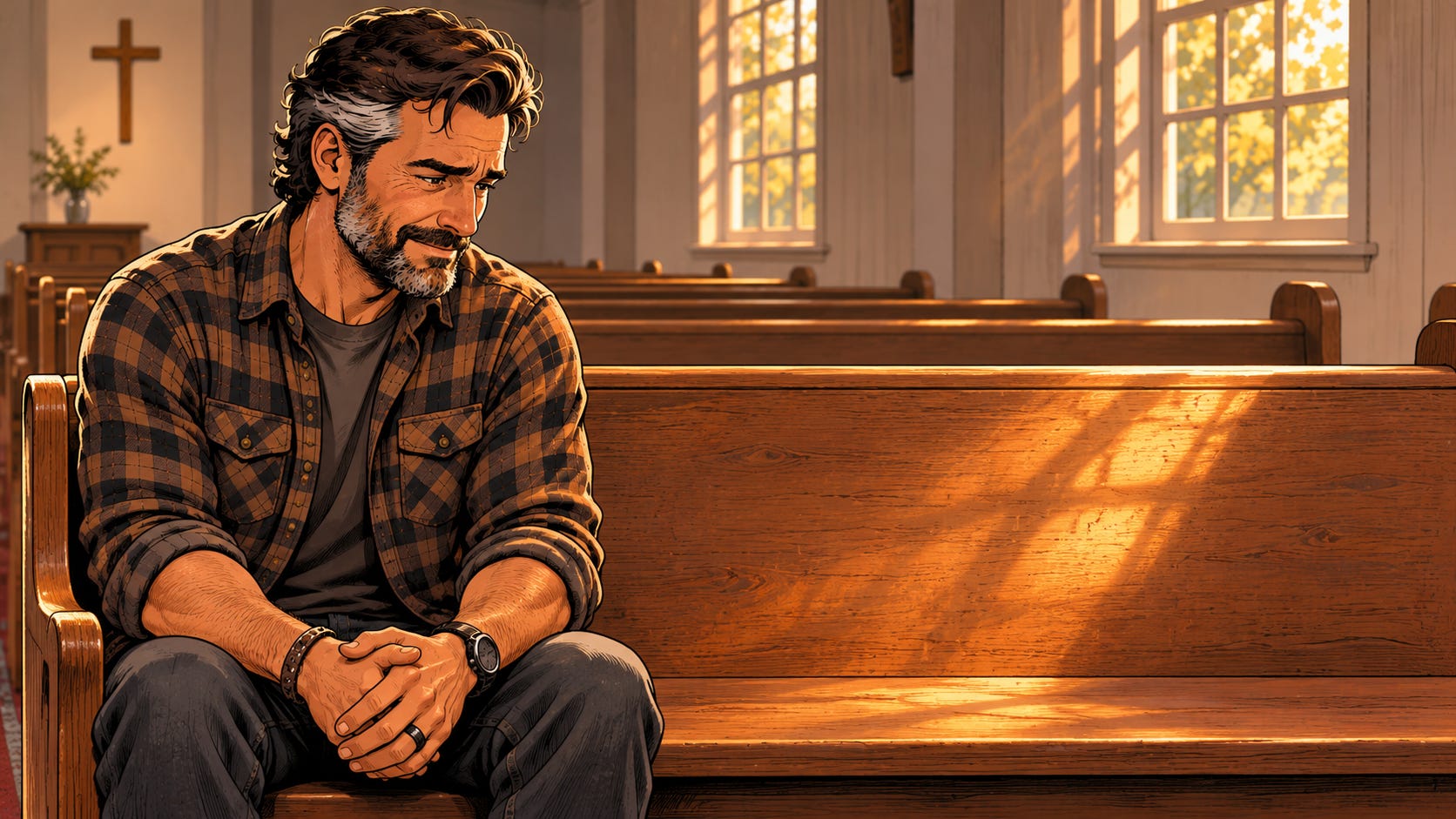
Why Do I Feel Like I Don’t Belong Anymore?
Growing up, I was always told that the church was the people who gathered to worship and share life together. I still believe that, and I think it helps explain why leaving can hurt so much. The people you used to sit with on Sunday might also be the people you would have called when something went wrong. It’s hard when the very people you would normally turn to are part of what you’re grieving.
Paul describes a far deeper kind of separation when he asks the Gentiles to remember where they stood before Christ.
Therefore remember that at one time you Gentiles in the flesh, called “the uncircumcision” by what is called the circumcision, which is made in the flesh by hands, remember that you were at that time separated from Christ, alienated from the commonwealth of Israel and strangers to the covenants of promise, having no hope and without God in the world.
Ephesians 2:11–12 (ESV)
The Jewish people had received the covenant promises of God. Gentiles were outside those covenants, and at the temple in Jerusalem you could see a physical reminder of that separation. Gentiles could enter the outer area known as the Court of the Gentiles, but a barrier kept them from going into the inner courts. Warning inscriptions made it clear that crossing that boundary could cost them their lives.
Imagine walking into a place where people worshiped God and seeing a sign that told you how far you were allowed to go. Paul wants the Gentiles to remember what it meant to be far from God’s covenant promises so they can understand what Jesus has done for them. That image also gives us a way to talk about the feeling of standing outside a community you once called home.
I think we sometimes hurry people through that part. We see someone hurting and want to help, so we tell them to find another church before we’ve stopped to ask who or what they lost. If you’re the one who left, it’s okay to name what you miss. You may miss some of the same people you’re hurt by, and that can take a while to sort through.
Who’s Walking With You While You Grow?
Maybe you left church last Sunday, maybe you’ve been looking but haven’t found a new one yet, or maybe you’re not sure if you’ll ever go back.
Every week, I send a new article for anyone who needs encuragement, and a place to ask honest questions with people who are figuring things out too.
If that’s you, join us.
Does God Still Want Me After Everything That’s Happened?
I remember a leader at the church where I grew up. I was a young teenager at the time, and whenever a major decision needed to be made, this leader would announce that they were going into their office to hear from God. The expectation was that when they came back out, whatever they said was what God wanted us to do.
I absolutely believe God speaks to His people. I’ve experienced His direction in my own life, and I want people to seek Him when they’re making decisions. But think about what happens when a leader presents their own decision as the last word from God. After a while, it can feel like asking that person an honest question is the same as questioning God Himself. And if you’ve spent years being taught to listen that way, it makes sense that you’d feel unsure how to approach God when the leader you trusted lets you down.
That’s why I love what Paul says in the very next verse.
But now in Christ Jesus you who once were far off have been brought near by the blood of Christ.
Ephesians 2:13 (ESV)
Pay attention to who does the work in that sentence. The Gentiles have been brought near, and Paul tells us how. It happened through the blood of Christ. Earlier in the chapter, he says God made us alive with Christ while we were dead in our sins. Our salvation is a gift of grace received through faith (Ephesians 2:4–9). The same grace that made us alive brought people who were far off into God’s family.
As a pastor, I get to pray with people, teach scripture, and help them learn to seek the Lord for themselves. I take that responsibility seriously. But the authority to welcome you into God’s presence belongs to Jesus. If going to church or even opening your Bible has felt hard lately, you can come to Him with that. You can tell Him exactly why it’s hard.
How Can I Trust Jesus When His People Hurt Me?
For he himself is our peace, who has made us both one and has broken down in his flesh the dividing wall of hostility by abolishing the law of commandments expressed in ordinances, that he might create in himself one new man in place of the two, so making peace, and might reconcile us both to God in one body through the cross, thereby killing the hostility. And he came and preached peace to you who were far off and peace to those who were near. For through him we both have access in one Spirit to the Father.
Ephesians 2:14–18 (ESV)
The temple barrier helps me picture what Paul is saying, but the wall he describes here is the hostility between Jews and Gentiles. Through the cross, Jesus reconciled both groups to God and made them one people. When Paul says we both have access in one Spirit to the Father, he means that a Gentile who once would have stopped at the temple barrier can now come to the same Father, through the same Jesus, as a Jewish believer.
I think it matters that Paul says Jesus Himself is our peace. Sometimes in church we use the word peace when what we really want is for a hard conversation to go away. The peace Paul describes came through the cross, where Jesus dealt with the hostility that divided people. When there’s been real harm, pursuing peace may involve telling the truth about what happened, asking leaders to take responsibility, and setting boundaries that protect people. Forgiveness and accountability can both be part of that work. Trust may take longer to rebuild, especially when you’re still waiting to see whether someone’s behavior has changed.
If it’s hard to know what to expect from Jesus after everything that happened, I’d spend some time with Him in the Gospels. In John 9, the religious leaders cast out a man Jesus had healed. When Jesus heard what happened, He went and found him. I love that detail. While other people were deciding the man had no place among them, Jesus took the time to look for him and speak to him. If people have made you feel like God would rather keep His distance, sit with that story for a while. See what Jesus does when someone has been pushed aside.
Will I Ever Feel Safe in a Church Again?
I’ve talked with people who wanted to be part of a church again and felt nervous just walking into one. Where do I sit? Will someone ask where I’ve been going to church? How much of that story do I even want to tell? I understand why someone might want to slip in, listen, and leave quietly for a while.
Paul gives us a picture of what Christian community can be.
So then you are no longer strangers and aliens, but you are fellow citizens with the saints and members of the household of God, built on the foundation of the apostles and prophets, Christ Jesus himself being the cornerstone, in whom the whole structure, being joined together, grows into a holy temple in the Lord. In him you also are being built together into a dwelling place for God by the Spirit.
Ephesians 2:19–22 (ESV)
Citizenship meant something to people living under the Roman Empire. It came with rights and a recognized place in society that foreigners didn’t share. So when Paul calls these believers fellow citizens, he’s saying they have a full place among God’s people. Then he brings it even closer to home. They’re members of the household. They belong there as family.
Paul goes on to describe Jesus as the cornerstone. In ancient construction, the cornerstone helped establish the alignment of the building. The rest of the structure had to line up with it. I think that’s a good way to consider the health of a church. You can appreciate a pastor’s preaching and still ask how the church’s decisions, teaching, and treatment of people line up with Jesus.
I also love where Paul takes the temple picture. At the beginning of the passage, we can picture Gentiles standing outside a barrier at the temple. By the end, God is building Jewish and Gentile believers together into a dwelling place for His Spirit. That has something to say about how we treat each other. The people sitting beside us are part of what God is building. How we care for them, especially when they’re hurting or asking difficult questions, matters.
If you’re ready to visit a church, give yourself time to see how people actually relate to one another. Listen to what’s taught, and notice how leaders respond when someone asks a question they weren’t expecting. You can ask who holds the pastor accountable or how concerns are handled. You can attend for a while before deciding how involved you want to become. If it would help to have someone with you, ask a trusted Christian friend to come along. There’s room to get to know people at a pace you can handle.
Where Do You Go From Here?
This week, take a few minutes to write down one thing your experience made you believe about God. Maybe it’s “God is disappointed in me,” or “I don’t think He wants to hear from me anymore.” Put it into words you’d actually use, even if it feels uncomfortable to see them on paper.
Then read Ephesians 2:13 alongside what you wrote.
But now in Christ Jesus you who once were far off have been brought near by the blood of Christ.
Ephesians 2:13 (ESV)
Read it slowly and ask what this verse tells you about where you stand with God today. If prayer has been difficult, you might simply tell Him what you wrote down and ask Him to help you take Jesus at His word. You can begin there, even if you’re still figuring out what happened or where you’ll worship next Sunday.
The people who hurt you may have made you feel like an outsider. If you are in Christ, you already belong to God.

Thanks for this thoughtful and compassionate article. Everybody has a story and everybody has wounds. And Church hurt is some of the worst kind of hurt. For sure. Strife seems to be an open door to all kinds of evil, even in the church.
One thing that really complicates relationships in church is that many people still have deep-seated rebellion and sin issues going on. For example, the rich young ruler walked away sad and feeling wounded by the prophetic confrontation and clarity of Jesus. Jesus loved the man too much to affirm his deception or let him feel accepted as an insider -while he still was serving the wrong master: covetousness.
God's kindness is not the same thing as the world's niceness. God's kindness still confronts our sin, but with compassion, patiently encouraging us to repent.
The world's niceness says you are to be accepted without question or reference to your actions or morality or to the authenticity of your profession of faith. Neither Jesus nor His apostles condoned sin or affirmed the impenitent. No discipline is pleasant at the moment, it may even feel like rejection. But if I accept correction and discipline, and truly begin to walk in the light as He is in the light, I can experience a freedom and fellowship among those who are passionately pursuing Jesus and a life of love and holiness.
This kind of life will put you in a real persecuted minority in our culture. Even in churches.
I have a relationship with the Father because of the blood of Jesus. A relationship only grows as much as you’re willing to put into it. Talk to Him. So relax, besides, He already knows everything.